
BRICS is an important alliance of emerging economies. BRICS comprises 10 countries – Brazil, China, Egypt, Ethiopia, India, Indonesia, Iran, Russia, South Africa and UAE. This year’s BRICS summit was held on 6 and 7 July in Rio de Janeiro, Brazil. And next year India is going to host this summit
BRICS was established in 2009 and is named after its member countries. Before South Africa became a member in 2010, it was known as BRIC.
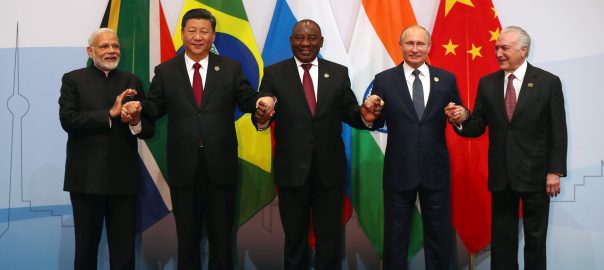
Member Countries Overview
- Brazil – Economic power in South America, agricultural exporter.
- Russia – Energy giant, military power.
- India – Emerging tech & service hub, large democratic market.
- China – Manufacturing hub, second-largest economy.
- South Africa – Gateway to African markets.
Indonesia became a full member on January 6, 2025, following approval in 2023 and formalization after its new government took office in 2024. It is now the 11th member of BRICS.
READ MORE : Ganesh Chaturthi : Historical Background and Significance of in Just 2 Minutes
Purpose of BRICS
- The primary objective of BRICS is to exchange trade and technology among its member countries and to promote economic development among countries.
- Its second objective is to promote the voice and influence of developing countries like ours in institutions like the United Nations, IMF, World Bank and World Trade Organization.
- The third objective of BRICS is to support an alternative financial and trading system globally. Apart from this, BRICS also promotes peace, security and socio-economic development among its member countries.
Structure and Functioning
Its structure is based on a rotating annual presidency, with the New Development Bank (NDB) and the Contingent Reserve Arrangement (CRA) serving as the key financial institutions.
Informal Bloc: BRICS is not a formal organization with a set structure; rather, it is an informal forum.
Annual Summits: To discuss and coordinate policies on a range of international issues, the leaders of the member nations convene an annual summit.
Rotating Presidency: Each year, BRICS members take turns serving as chairman, giving each nation the opportunity to determine the agenda for the year.
Rotating Presidency: Each year, the members of BRICS take turns serving as chairman, giving each nation the opportunity to determine the agenda for the year.
Ministerial Meetings: Foreign affairs, finance, and other ministers meet on a regular basis to discuss particular areas of collaboration.
Working Groups: A number of working groups have been formed to concentrate on particular subjects, like sustainable development, trade, and investment.
Financial Institutions: Important institutions founded by the group include:
The New Development Bank (NDB) is a financial institution that specializes in funding sustainable development and infrastructure initiatives in emerging economies, including the BRICS.
Contingent Reserve Arrangement (CRA): A system for giving member nations with balance of payments problems liquidity support through currency swaps.
Geopolitical Importance
Because it provides a forum for developing countries to oppose the Western-dominated global order, encourage multipolarity, and gain more economic and political clout through enhanced collaboration and diverse financial institutions, BRICS is a significant geopolitical force. In addition to offering chances for economic growth free from the political restrictions frequently associated with Western loans, its expansion represents the growing power of the Global South and serves as a counterbalance to current Western-centric organizations like the G-7.
BRICS in the Changing World Order
All nations have equal standing in the international system since BRICS members favor an international order over a Western one. The nations only acknowledge that their opinions may not align with those of the West, despite some characterizing the group as an anti-West club.
Prospects for the Future
- It is in a position to play a key role in the multipolar world:
- A potential common currency to lessen reliance on the dollar.
- increased interconnectedness in digital economies.
- In the upcoming years, more partners and members will join.
- greater influence over the frameworks for international security and climate policy.
Conclusion
From a memorable acronym, This Organization has developed into a powerful geopolitical force. With the addition of new members like Egypt, Ethiopia, Iran, the United Arab Emirates, and Indonesia, along with a growing network of partners, This is redefining the power dynamics of the twenty-first century and going beyond simple economic cooperation.
Pingback: Top 50 General Knowledge Questions and Answers 2025 - uslearning.in