
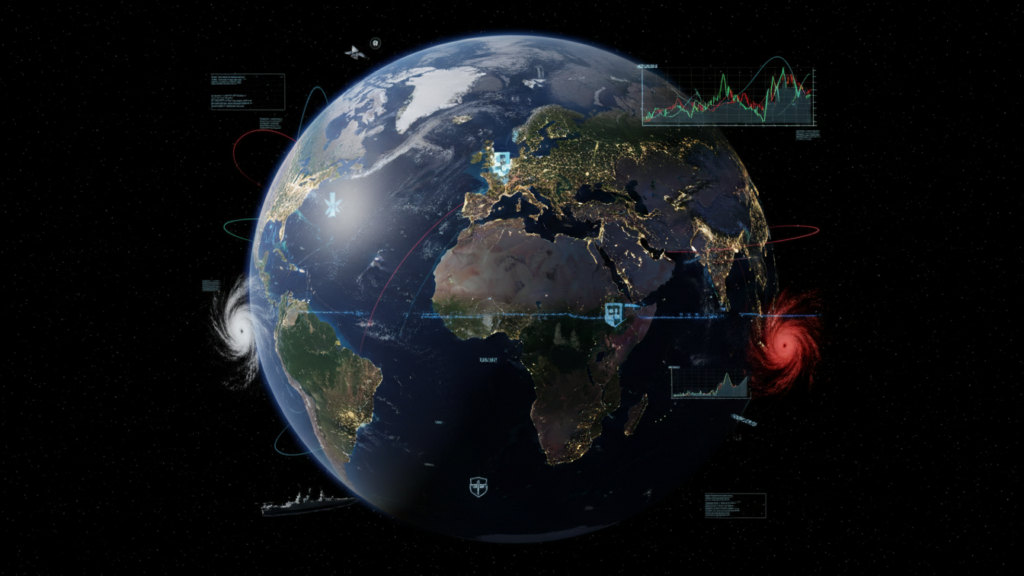
Geopolitical Risks in 2026: Major Threats
The year 2026 stands at a crucial crossroads in global history. Rapid political shifts, technological competition, climate stress, and power struggles among nations are redifing how the world operates. Understanding the top geopolitical risks in 2026 is essential for policymakers, businesses, students and global citizen alike.
As traditional power structures weaken and new alliances emerge, geopolitical uncertainty has become a defining feature of the modern world. This article present a comprehensive roundup of the major geopolitical risks in 2026 shaping the world political order, offering valuable insights for readers of Us Learning.
Geopolitical Risks in 2026 : Escalating Great Power Competition
On of the most critical geopolitical risks in 2026 is the intensifying rivalry between major global powers, particularly the United States, China, and Russia.
- The US-China rivalry extends beyond trade into military, technological and idological competition
- Russia continues to challange Western influence through stretegic alliences and regional pressure
- Diplomatic tensions weaken international cooperation
This great-power competition increases the risks of economic fragmentation, military escalation and long-term global instability.
Persistent Regional Conflicts and Wars
Despite global calls for peace, regional conflicts remain unresolved in several parts of the world.
Key hotspots include:
- Eastern Europe, where prolonged tensions affects regional security
- The Middle East, marked by proxy wars and political fragmentation
- Africa, where coups, insurgencies, and weak governance persists
These conflicts disrupt global supply chains, fuel humanitarian cries, and contribute to rising refuge flows- making them a major global geopolitical risks in 2026.
Taiwan Strait and Indo-Pecific Security Tensions
The Indo-Pecific regions continue to emerge as the center of geopolitical competition. Tensions surrounding Taiwan represent one of the most dangerous flashpoints.
- Increased military activity rises the risks of miscalculation
- Taiwan’s role in global semiconductor supply chains increases international stakes
- Strategic alliances influence regioanl power balance
Any instability in this region could severely impact global trade, technology and economic security.
Economic Fragmentation and Global Trade Risks
Economic geopolitics has become a key driver of international relations in 2026. Countries are increasingly prioritizing national economic security over global integration.
Major risks include:
- Trade wars and tariffs
- Sanctions targeting critical industries
- Disruption of global supply chains
This economic fragmentation slows global growth and intensifies political rivalries, especially between major economies.
Climate Change as a Geopolitical Force
Climate change has evolved into a powerful geopolitical risks in 2026 rather than just an enviromental challenge.
Key climate related geopolitical risks in 2026 include:
- Competition over food, water and energy resources
- Climate-induced migration and displacement
- Increased instability in climate-vulnerable regions
Nations unable to adapt the climate pressure face heightened of conflict, economic collapse and political unrest.
READ MORE : 7 Critical Reasons & Risks Behind the 2026 U.S. Strikes in Venezuela — World War 3 or Global Shift?
Rising Political Polarization and Democratic Backsliding
Internal political instability has become a global phenomenon. In 2026, Polarization and populism continue to weaken democratic institutions worldwide.
- Public trust in political system is declining
- Election interference and misinformation fuel unrest
- Governments struggle to maintain consistent foreign policies
Domestic instability often spills into international relations, increasing geopolitical uncertainty.
Cyber Warfare and Technological Rivalry
Technology has become one of the most dangerous battlegrounds in modern geopotics.
Major Risks include:
- State-sponsered cyberattacks on critical infrastructure
- Artificial Intelligence used in military and political operations
- Competition over data control and digital dominance
Cyber conflicts can escalate rapidly without warning, making them one of the most unpredictable geopolitical risks in 2026.
Conclusion
The top geopolitical risks in 2026 reflact a world undergoing rapid transformation. From great-power rivalry and regional conflicts to climate stress and cyber warfare, these challenges are reshaping the global political order.
For readers of Us Learning, Staying informed about geopolitical trends is essential in understanding how global events affects economics, security and everyday life. Awareness of these risks allows individuals and nations to better prepare for an uncertain future.